This cello came to me a few years after the owner's old girlfriend caught it with a Tae Kwon Do kick. An expensive instrument would warrant a new neck being carved and fitted, in this case the cost of replacement would greatly exceed the value of the instrument. So, a planned glue repair is in order.
The first step was to remove the fingerboard, and to make a simple bond repair using high-strength epoxy. Hide glue was not appropriate, as it is too weak and there is no intention of ever dismantling the repair.
The join was then reinforced with two long dowel pegs. One was vertical, the other inclined towards the neck. Once the cello is restrung, the principal tensile forces would pull the neck upwards, so be leaning the dowel the peg will experience compressive tension, with minimal flexion.

Before gluing the pegs I cut a V along each rod, to give excess glue an escape route. Otherwise the glue would pool in the bottom of the hole and stop the dowel from penetrating to its full length, thereby weakening the joint. The glue used was regular PVA wood glue.

Once the glue was set, I cut and smoothed off the proud peg ends, and reinstated the fingerboard.
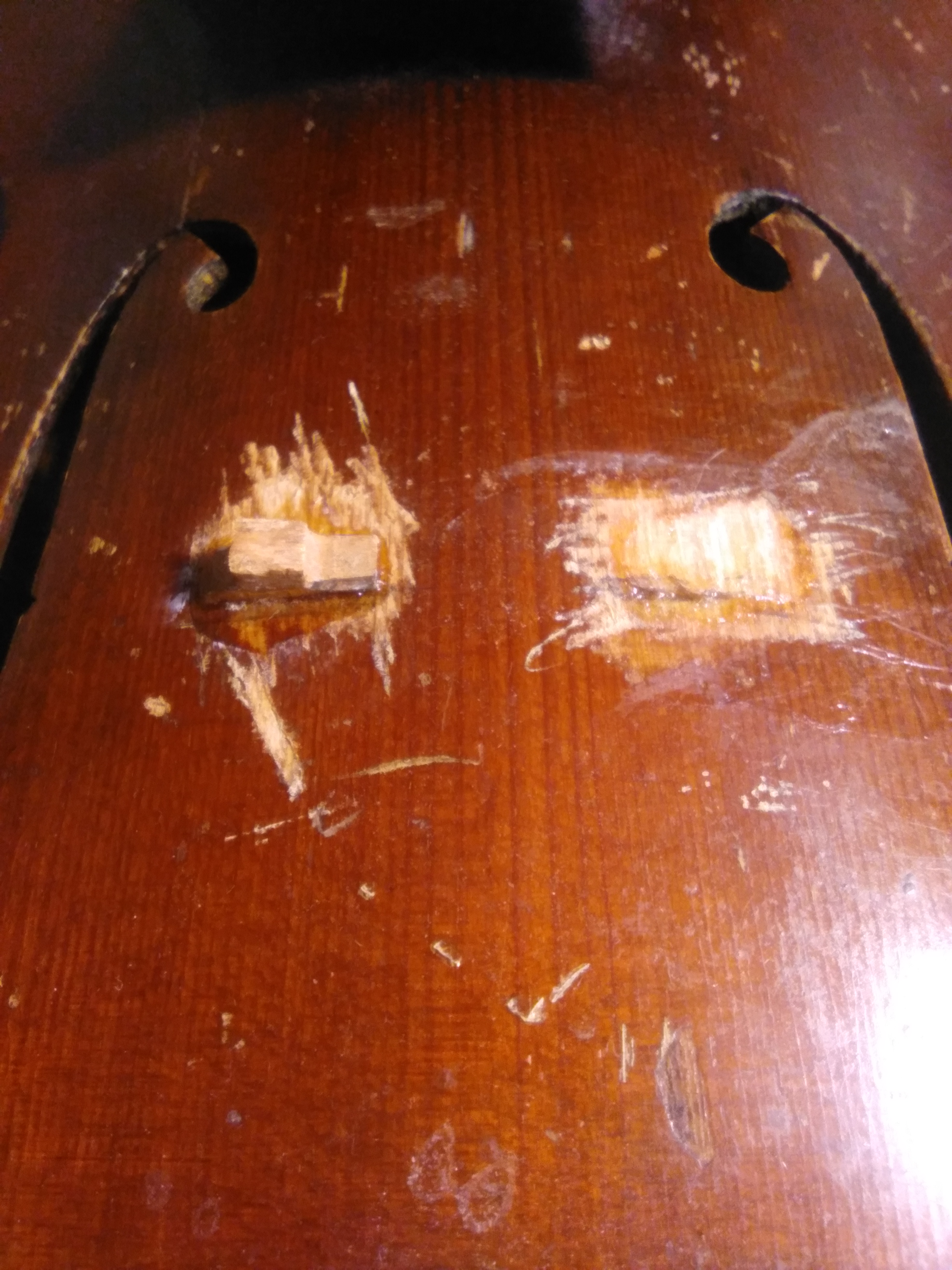
 There were also a couple of face chips along the neck join, so I rebuilt those with some matched spruce.
The varnish finish (factory spray stain and spray nitro) had been damaged around the repair, so I worked a combination of oil stains and shellac to restore the finished, before final polish and waxing.
Cut and set a new sound post, refit the spike button ad restrung.
Ready to play!

 A routine heat and lift removed the frets. Before fitting the new frets I sanded and reconditioned the fingerboard, with dust putty to fill the gouges, and careful oiling (linseed and walnut) with a carnauba rub to finish.